Search This Blog

Wednesday, May 6, 2015

Peter: A hot-head!


We all have different personalities. Most of our character traits and personality traits develop when we are in childhood or are given to us from the Lord for a purpose we may or may not see right now.


Today, let’s take a look at Simon Peter, also known as Peter, in the New Testament. Peter was a fisherman who later became a disciple of Jesus. He is one of the twelve disciples chosen by Jesus. Peter was a strong personality who, to outsiders and insiders, could appear inconsistent in his Christian walk. He could be a boastful, impetuous, impulsive hot-head at times. Some say he exhibited a lot of the characteristics of a person with Attention Deficit Hyperactive Disorder (ADHD). In John 18:10, we see Peter’s impulsiveness when he quickly drew his sword and struck the high priest and cut off his right ear. In John 21:7 when Jesus appeared to his disciples after His resurrection, Peter heard another disciple say, “It is the Lord,” and immediately he threw off his outer garment stripped for work, and threw himself into the sea. In Matthew 26:33, we see an example of his pride when he says to Jesus, “Though they all fall away because of you. I will never fall away.”
Throughout our Christian journey, we will experience ups and downs, passivity or assertiveness, or even denial as Peter did when he denied Jesus three times before the cock crowed. But note what Peter did as soon as he realized he denied his Lord. He wept bitterly and was so sorrowful he had hurt his Lord and discredited Jesus’ name. His sensitivity came out when he thought he had made a shipwreck of his life by dishonoring God. In 1 Timothy 1:10, Paul charges people to wage a good warfare saying “by rejecting this, some have made [a] shipwreck of their faith.”

But Peter changes. After Pentecost, in the Book of Acts, we see Peter becoming more steadfast. He is continuing to develop a Godly character. We find him not so self-centered or proud. We see him growing in his Christian faith. Sin can lead us to doubt God. But Peter is keeping his faith strong and learning from his experiences. He is growing and maturing in the Lord.
How can we follow Peter’s example in this area of faith when it is so easy to get discouraged when we don’t see answers or God’s directions fast enough? Romans 10:17 states, “Faith comes from hearing, and hearing through the word of Christ.” We can put ourselves under the teaching of God’s word through preaching, personal Bible study, and Christian fellowship. Our faith does matter to God. And, even when we are faithless, remember that God does remain faithful [2 Timothy 2:13]. By becoming a life-long learner on the ways of God, our faith and trust in the Lord will grow. We will become more mature believers, and it will show in our lives through a deeper love for God and our fellow man.

Ah, but Peter matures a little more. He is now writing 1 and 2 Peter. It is hard to believe that this hot-headed disciple from the Gospels is now a great leader of love, humility, and respect for authority. He is now imparting wisdom to others teaching them how to:

-          Be born again to a living hope;

-          Be holy;

-          Be Godly husbands and wives;

-          Be stewards of God’s grace;

-          Be discerning of false prophets and teachers; and

-          How to live in the Last Days.

Peter’s life is an example of sanctification. Bible Study Tools says to, “sanctify someone or something is to set that person or thing apart for the use intended by its designer.” Our designer is the Almighty God. As believers, we are all somewhere along a timeline as we are being sanctified in the Lord. We may be in the hot-head stage, the maturing stage, or the imparting wisdom stage. But, wherever we are in our spiritual journey, the Lord desires our faithfulness. As Proverbs 3:3 says, “Let not steadfast love and faithfulness forsake you; bind them around your heart, so you will find favor and good success in the sight of God and man.”

Awaken Me: A Devotional Prayer Journal (ISBN 978-1-4627-2578-6)

God, It's Me: 181 Days for Young Adults to Become Passionate about Prayer and Bible Study (ISBN 978-1-4627-3821-2)

Wednesday, April 29, 2015

Cocooning!

Cocooning!
 
Have you ever woken up feeling that you just want to go back to bed. You don’t want to think about the future. You don’t want to pick up the house. You don’t care if the dishes are left in the sink. And you don’t care about even opening the curtains to let a little light in.

You just want to remain in the dark. You want to stay in a place where no one can see you. You want to be closed in where you can be alone with your own thoughts and even give yourself the freedom to have a pity party if you desire. And heaven help us if the doorbell rings. We don’t want any intrusions, so we pretend we aren’t home and pretend no one is behind the door. Sometimes these feelings stem from just being lazy. Other times it is because you have been too involved in the outside world that you need a break.

It is okay. It happens to all of us at one time or another.
The Merriam-Webster Dictionary’s verb definition of cocoon is “to spend time at home instead of going out for other activities.” I am one of those people who likes to cocoon!

Usually when I am at home, I like my curtains closed most of the time. It isn’t because I don’t like the light; it is because when I am at home, I like to be truly at home – closed in; away from noise; away from outside pressures. I just like the secure-closed in feeling of being safe – of being allowed to think my own thoughts without distractions.
Jesus needed those times too. He needed to get away to pray by himself. He needed that quiet time to dwell on his life and his God-given mission. We need that too. But, with too much time to reflect, we can become so introverted that we are no use to others. Yes, closing in to relax and have time alone with God is necessary, but if when we find ourselves closing in without the spiritual tug to open ourselves up to be used by the Lord, we need to re-evaluate our motives.

Years ago, I had surgery. I had to stay in the house by myself for 2-3 weeks. Yes, I enjoyed the solitude needed for healing. I enjoyed the days getting up going to the fridge to get a drink, and then going back to bed surrounded by my blankets and my favorite books and reading materials. But, there does come a time when we need to get out. We need to experience life and be around other people.
If we find ourselves in a position where we feel we just can’t get out and face people, we need to muster up enough courage (with God’s help) and fortitude to be able to get going with life. It isn’t that we have to give up our quiet solitary life completely. But, we do need to ‘escape’ our cocoon and see what God has for us.

To do this, we must take time in our solitude to ask God for courage; to trust the Lord to show us how to be brave; how to minister to others; and when to cocoon back into the solitary we enjoy and many times need.


Then, because so many people were coming and going that they did not even have a chance to eat, he said to them, “Come with me by yourselves to a quiet place and get some rest.”

Joshua 1:9 ESV

Have I not commanded you? Be strong and courageous. Do not be frightened, and do not be dismayed, for the Lord your God is with you wherever you go.”

Awaken Me: A Devotional Prayer Journal (ISBN 978-1-4627-2578-6)

God, It's Me: 181 Days for Young Adults to Become Passionate about Prayer and Bible Study (ISBN 978-1-4627-3821-2)

Photo: ©GreeneFamily

Thursday, April 23, 2015

Moving

Moving Away, Moving On, Moving Forward

Merriam-Webster’s Dictionary defines moving as “changing [a] place or position as relating to the activity or process of moving to a different place to live or work.”
Have you ever had to move in one way or another? Most of us will answer an astounding “YES” to that question.  Maybe you have moved to a new house, a new job, a new spiritual journey, or a new stage of life.
Just recently, I encountered moving home to the U.S. after living in Nigeria. I am in the process of adjusting. Many days I find myself pondering or exploring how to pick up the pieces left behind; how to console myself when my friends have moved on in my absence; how to not miss the past; and how to basically get back into the swing of Western culture.

It is tough readjusting. While I feel I “deserve” an adjustment phase, it probably doesn’t help that I am holding on to the past as tightly as children hold on to their security blankets. I am still thinking of my Lagos church, my Lagos Bible study, my Lagos apartment, my newly found Lagos friends, The Punch (the best Nigerian newspaper), and even the little Lagos fabric store at the mall. I miss my Lagos driver and my Lagos housekeeper. And, I don’t miss them so much for their service as I do for their camaraderie. And, all this deep stirring in my heart is creating an emotional response that I am not too proud of.
Maybe you are experiencing a loss of some kind: a job loss, a painful divorce, or a death in the family.  I have been sitting on my couch, way more than I should be lately, cradling a pity-party in my heart and mourning my loss. So, I decided to research how two Bible characters dealt with moving on – one who did so the wrong way and one who did it the right way. And, incidentally, both are named SAUL!
In the Old Testament, King Saul was chosen by the prophet Samuel to be Israel’s first king. King Saul started out as a righteous man, but he allowed his jealousy to get the best of him. When David returned from killing Goliath, 1 Samuel 18:7-9 states, “And the women responded as they laughed and frolicked, saying, Saul has slain his thousands, and David his ten thousands. And Saul was very angry, for the saying displeased him; and he said, ‘They have ascribed to David ten thousands, but to me they have ascribed only thousands. What more can he have but the kingdom?’ And Saul [jealously] eyed David from that day forward.” Saul’s problem was he foresaw a “JOB LOSS” and he couldn’t accept that he would have to move on. Read 1 Samuel 18-31.
The process King Saul embraced in order NOT TO HAVE TO MOVE ON involved:

-          He harbored ill-feelings and jealousy;

-          He tried to kill [David];

-          He encountered evil spirits;

-          He became angry;

-          He actively sought evil;

-          He lived an inconsistent life towards God;

-          He sought a medium instead of God;

-          He committed suicide.

Wouldn’t it have been a lot easier for King Saul to deal with his ill-feelings and jealousy? He could then have moved on and accepted God’s will and proceeded to the next phase of his life gracefully and with God by his side?
Now, let’s look at someone who had to move on – someone who did it the right way.
In the New Testament, Saul of Tarsus (who later became known as Paul), a die-hard Jew, moved from being a relentless persecutor of believers to a saved follower of Jesus Christ. Saul ravaged the church with threats and actually murdered Christ’s disciples along the way. But one day, on the way to Damascus, a light shone from heaven and Saul came face to face with Jesus’ voice. He became a new man in Christ. After his conversion, Paul was without sight, food, and drink for three days. But as only the Lord can do, He brought Ananias into his life to encourage him in the Lord. He was baptized, ate, and then was strengthened. Paul stayed with Jesus’ disciples being trained in the ways of our Lord Jesus Christ. After his training (and adjustment period), Paul, moved into proclaiming Jesus in the synagogues and beyond. Read Acts 9.
The process Paul used to get him to the place of MOVING ON involved:

-          He embraced his change;

-          He allowed for time of solitude;

-          He accepted encouragement;

-          He strengthened himself by spending time in counseling and training;

-          He actively involved himself in God’s work.

Now, which approach seems best to you – King Saul’s or Saul of Tarsus’ approach?
We all go through transitions in life. Don’t be afraid of the changes in your life. We get hung up on our changes because we are emotional beings. Sometimes we don’t like change, while other times, we do. For you, your transition may involve laughing, smiling, tears, and/or sorrow. We will always have events and circumstances that will confront us. Moving away, moving on, or moving forward brings their own unique challenges, hardships, and/or excitement. Let’s try to use the experiences we face today as a springboard to focus on what is yet to come in God’s eyes. Jeremiah 29:11 states, “For I know the plans I have for you," declares the LORD, "plans to prosper you and not to harm you, plans to give you hope and a future.”
I think that what God is telling me from this study personally is, “Patti, don’t be afraid of the changes in your life. I sent you to Nigeria; and, I just sent you back. I know what I am doing. Follow your own advice, and DON’T REMOVE ME FROM YOUR MOVES.”
And likewise, “Don’t remove God from your moves.” He knows exactly what He is doing.
Amen.
Moving Away Verse:
For I know the plans I have for you, declares the Lord, plans for welfare[a] and not for evil, to give you a future and a hope. Jeremiah 29:11 ESV
Moving On Verse:
Remember not the former things, nor consider the things of old. Behold, I am doing a new thing; now it springs forth, do you not perceive it? I will make a way in the wilderness and rivers in the desert. Isaiah 43:18-19 ESV
Moving Forward Verse:
Trust in the Lord with all your heart, and do not lean on your own understanding.  In all your ways acknowledge him, and he will make straight your paths. Proverbs 3:5-6 ESV


Awaken Me: A Devotional Prayer Journal (ISBN 978-1-4627-2578-6)
 
God, It's Me: 181 Days for Young Adults to Become Passionate about Prayer and Bible Study (ISBN 978-1-4627-3821-2)
 
Photo: ©GreeneFamily

Thursday, April 16, 2015

State of Emergency


I read a lot of news articles. I have them sent directly to my iPhone. I use Google Alerts so I will be notified immediately on certain topics. I read many online newspapers. And I subscribe to “real” magazines.
One day one of the articles that came through one of my sources and printed in the Star Tribune was entitled More than 40 people killed by 2 female suicide bombers in northeastern Nigeria. The article was about two teenage girls that entered the busy marketplace in Maiduguri, a provincial capital in NE Nigerian state of Borno. In their vests were explosives hidden beneath their full hijabs. The first girl detonated her bomb killing 3 women. As rescuers rushed in, the second girl screamed and set off her explosives, killing many more.

While bombings and killings like this occur frequently in Nigeria, I wondered if we are getting desensitized hearing about it. The answer is probably YES. But, with this article, I wondered if the two girls were being used by the Islamic Extremist group Boko Haram who were immediately suspected to be the insurgents responsible for the attack. Were the girls forced to carry the bombs? And were these girls from the group of the 200+ girls kidnapped from Chibok (78 miles southwest of Maiduguri) in April, 2014 that are still missing? Then, my mind wondered if people are really “suicide bombers” if they are forced to carry out a task such as this. I also placed my heart into the minds of those 200 girls’ parents still missing – wondering if they were all now concerned that these two girls might have been their daughters. There must be nothing like losing a child, double that with your child being kidnapped, double that with thinking that your child might be used by an Islamic militant group to carry bombs, and double that with not knowing if your child is dead or alive.
Maiduguri is the largest city in Borno state. The city had already been placed under a state of emergency because of the extreme violence there.

But what happens when a city has been declared in “a state of emergency?” The Longman Dictionary of Contemporary English states a state of emergency is, “when a government gives itself special powers in order to try to control an unusually difficult or dangerous situation, especially when this involves limiting people’s freedom.”

Do you ever feel yourself in a state of emergency? We all do at some point in our lives. Maybe you are mourning the loss of a loved one; coping with a divorce; dealing with a financial crisis; crying out to God for a child or a spouse. No matter what your ‘State of Emergency’ might be, God is the only one that can come to your rescue, answer your questions, and get you to a place of safety. He can do that, but you must first place your trust in Him as your Lord and Savior. With your relationship secure in Him, He has provided you with His Holy Spirit who can guide you in prayer and help you to understand the Bible in new and exciting ways. Look to Him, read His Word, and believe He will touch you and guide you.
 
While cities and countries depend on the government to help them during these states of emergencies, we must depend on God through our Lord Jesus Christ to get us through our own personal emergencies.

Ephesians 4:19 - And my God will supply every need of yours according to his riches in glory in Christ Jesus. ESV

Patti Londa Greene, Author

www.PattiGreene.com
Awaken Me: A Devotional Prayer Journal
(ISBN 978-1-4627-2578-6)

God, It's Me: 181 Days for Young Adults to Become Passionate about Prayer and Bible Study
(ISBN 978-1-4627-3821-2)

[Copyright Free Images]

April 14, 2015 was the ONE YEAR anniversary of the kidnapping of the Chibok girls (ages 11-18). Please take some time today to pray for their families and their release and/or escape during their "State of Emergency."
 

Thursday, April 9, 2015

Prayer, Hope, and Answers!


At certain times in our lives, we encounter situations that require us to lift up deep cries, wails, and prayers to our heavenly Father. These prayers may involve our health, our family, our loneliness, or a multitude of other circumstances. Let’s take a look at Hannah’s prayer and discover how Hannah felt and how the Lord chose to answer her prayer. Keep in mind that God always sees the big picture for YOUR life, and God’s answers are always designed especially for you or whomever you are praying for.
In 1 Samuel 1-2, we read that Hannah was married to Elkanah. Elkanah was a Godly man who loved Hannah very much; but the Lord had not blessed their union with any children. Peninnah, also Elkanah’s wife had children. Peninnah continually provoked Hannah because of her childlessness to the point she wept and would not eat.  Hannah was embarrassed and grieved with this harsh treatment. Have you ever been at the point, like Hannah, where you have experienced embarrassment, grief, and/or distress? If so, let’s look at the process that Hannah experienced and see if you find any similarities in your life.

1.       God loved Hannah. 1 Samuel 1:5

2.       Hannah had no children. 1 Samuel 1:5

3.       Hannah was embarrassed and grieved. 1 Samuel 1:6
 
4.       Hannah was provoked, so she wept and did not eat. 1 Samuel 1:6
 
5.       Her husband loved her. 1 Samuel 1:8
 
6.       Hannah was distressed. 1 Samuel 1:10
 
7.       Hannah prayed to the Lord as she wept bitterly. 1 Samuel 1:10
 
8.       Hannah vowed her unborn child to the Lord. 1 Samuel 1:11
 
9.       Hannah poured out her soul to Eli the priest. 1 Samuel 1:15
 
10.   Eli gave Hannah hope. 1 Samuel 1:17
 
11.   Hannah left with a good countenance and wasn’t sad anymore. 1 Samuel 1:18
 
12.   Hannah conceived and bore a son – Samuel. 1 Samuel 1:20
 
13.   Hannah gave her child to Eli as she vowed. 1 Samuel 1:24-28.
 
14.   Hannah rejoiced and glorified the Lord for his answer. 1 Samuel 2:1-2
 
How often do we find ourselves in one or more of the steps that Hannah found herself? When I read 1 Samuel 1, I became so impressed that Eli gave Hannah hope. And, it took that hope to get Hannah out of her funk. Proverbs 13:12a says, “Hope deferred makes the heart sick. . .” It was hope that made Hannah’s countenance shine. She went away with hope. Through hope, her strength returned. She ate and left with a smile on her face (while still in the midst of her situation)!
When you are facing situations beyond your control, remember HOPE. Even Zophar, in Job 11:18, states, “And you shall be secure and feel confident because there is hope; yes, you shall search about you, and you shall take your rest in safety.”
If a friend or family member is in a distressful situation, give them hope. Tell them they can be secure in the Lord Jesus Christ by confessing their sins and trusting in Him. Pray for their perseverance to ease the sorrow they are facing during their difficult time.
In Luke 13, Jesus healed a woman who had been sick for 18 years. “She was bent over completely forward and utterly unable to straighten herself up or to look upward.” But she encountered Jesus and was “released from her infirmity . . . all the people rejoiced over all the glorious things that were done by Him.”
The complete verse in Proverbs 13:12 says, “Hope deferred makes the heart sick, but a longing fulfilled is a tree of life.”
Amen!!! Keep praying and your longing will be fulfilled in His way in due time.
“For this child I prayed; and the LORD, hath given me my petition which I asked of Him.”
1 Samuel 1:27

Patti Londa Greene, Author
www.PattiGreene.com
Awaken Me: A Devotional Prayer Journal
(ISBN 978-1-4627-2578-6)

God, It's Me: 181 Days for Young Adults to Become Passionate about Prayer and Bible Study
(ISBN 978-1-4627-3821-2)

Friday, April 3, 2015

Rescue Me


I became aware of a new tool today titled Rescue Me. It is a computer tool that gives “an accurate picture of how you spend your time to help you become more productive every day.”  The program (which you pay for) works “by noting how long you spend on your computer.” It monitors how much time you spend browsing certain websites,” i.e. Facebook, Twitter, Fox News, Pinterest.
I am sure it is a very productive tool and can help us see areas where we need to lessen our online time. This would allow us to get busy and going on things that are more beneficial to our goals – if we have some goals.

The Bible is like that too. When we read the Bible and allow God to search our hearts, He will show us what to do and what not to do. And for all those gray areas in-between, the Holy Spirit will enlighten us to his guidance and direction. Then, we won’t need to spend the valuable time He has given us trying to figure out what path to take. He will have already shown us or given us the peace not to fret over the worries and cares of life.


When our life is too busy, too cluttered, and/or we need rescuing, turn to God. He can “rescue us” and get us on the path He has strewn out for us.
That is absolutely amazing when you think about it.

Rise up and help us; rescue us because of your unfailing love.
Psalm 44:26 NIV

Patti Londa Greene, Author

www.PattiGreene.com

Awaken Me: A Devotional Prayer Journal
(ISBN 978-1-4627-2578-6)

God, It's Me: 181 Days for Young Adults to Become Passionate about Prayer and Bible Study
(ISBN 978-1-4627-3821-2)
 

Thursday, March 26, 2015

Saying Goodbye


[Written March 21, 2015]

I just spent the final 30 minutes saying goodbye to my driver Lucky. Today we are leaving our expat assignment in Nigeria to move back to the United States. Yes, almost all expats in Lagos, Nigeria must have drivers for safety reasons. Lucky and I sat in the hotel lobby chatting. I shared how much I appreciated his service and love towards us. You see, Lucky is a believer. He is also a pastor. He was also our driver. We both needed each other for the time we had together. Going above and beyond his job description was Lucky’s forte. He would lay out Christian books and magazines for me to read on the backseat of the car. He would play Christian music for me as we drove around if I requested it. He would answer my deep theological questions. Lucky was not only our driver, but a brother in Christ. He shared that when we first came to Lagos my husband became like a father to him. His father died when he was 10 years old. He had no uncles or cousins to fill his father’s void. Per Lucky, my husband became that father figure to him. Have you ever noticed that it is in the final moments with someone, we tend to share our deepest thoughts? It could be the last minutes before you leave your child at college for the first time, it could be during the mother-son wedding dance, and it could be your final moments with a loved one before they pass away. In our final moments, Lucky and I encouraged each other by expressing our love and gratitude for each other. We both confirmed why God drew our families together. We also agreed that The Lord knows why we are being separated. Our most honest thoughts were shared in this final meeting. Now, let’s look at three of Jesus’ last earthly "cry outs" on earth. What did he share before his earthly separation from the people God created Him to serve and be an example to? First, before Jesus’ arrest, Jesus cried out with a loud voice saying, “Eli Eli, lema sabachthani? That is, My God, My God, why have you forsaken me?” (Matthew 27:46) Secondly, at his crucifixion, Jesus said, “Father forgive them, for they know not what they do.” (Luke 23:45) Finally, at his death, Jesus called out with a loud voice saying, “Father, into your hands I commit my spirit.” (Luke 23:46) Whenever we depart from friends, families, jobs, let’s “pretend” that those moments might be our last moments with them. Let’s use our words wisely and follow Jesus’ example by saying only words and phrases that are heartfelt, meaningful, and Godly.

Patti Londa Greene, Author
www.PattiGreene.com

Awaken Me: A Devotional Prayer Journal
(ISBN 978-1-4627-2578-6)

God, It's Me: 181 Days for Young Adults to Become Passionate about Prayer and Bible Study
(ISBN 978-1-4627-3821-2)

Monday, January 19, 2015

Sewing and Salvation

A few months ago I blew up my sewing machine. Don’t ask. But, I will say it was my husband’s fault. He didn’t get me the right converter. In fact, he didn’t buy me a converter at all. But, in his defense, he did tell me not to use it until we got the right voltage, but that was 11 months ago! And, I took a chance and after the big BANG, some nice white fluffy smoke shot out of my machine.

Now that I have vented, the end result is that a new sewing machine was birthed out of the blow up! The machine blew up. My husband and I didn’t blow up at each other. He is sweet.

My New Sewing Machine!
 
Moving on . . . Last night and today, I used my new machine for the very first time. It was awesome, sort of. First, a good friend came and showed me the ins and outs of this machine. Piece of cake, I thought. And, it was, until the stitching was pulling from the bobbin color on the other side. So, a call to my friend occurred. Thank goodness for friends. Second, I decided to get fancy and use one of those fancy computerized stitches. Yes, it looked awesome, but do you know how LONG it takes to sew something with those stitches? So, luckily, I was able to just use that stitch on one side and go back to the “fast stich.” But, then, I inadvertently sewed two seams opposite of how they were supposed to be sewn. Oh no, I had to get out that pesky stitch remover (ah, yes, they are called seam rippers) and what a hassle. But, when all was said and done and my project was completed, I was pretty happy. Yes, it didn’t fit quite like I would like it to, but I’m not perfect and I fudged a little on my homemade pattern to avoid more work for myself.

Seam Ripper and Other Sewing Tools
 
Upon completion . . . While it wasn’t my first time to sew, I started to think about how God felt the first time he sewed. In fact, it is the only time we read about God sewing in the entire Bible.
“[Eve] was convinced. She saw that the tree was beautiful and its fruit looked delicious, and she wanted the wisdom it would give her. So she took some of the fruit and ate it. Then she gave some to her husband, who was with her, and he ate it too. At that moment their eyes were opened, and they suddenly felt shame at their nakedness. So, they sewed fig leaves together to cover themselves.” Genesis 3:6-7.
Later, after God confronts them and explains what will happen, “the LORD God made clothing from animal skins for Adam and his wife.” Genesis 3:21.
I wondered how God felt sewing these clothes for Adam and Eve. First, I am sure he felt extreme sadness that he was even sewing. They sinned and he was grieving. But, he was taking them at their lowest point and helping them to move on. That is God for you.  How do we feel when we sin? Sometimes we have friends to help us out of our sin, depression, uneasiness, or whatever we want to call it. Sometimes, we remain in our sin for a long time – sort of like spending all that time on that fancy stitch that took so long for me. But, we can get out of it quickly, but we must decide to do something else, or go a different direction. But, what happens when we mess up and go in an opposite direction from the Lord. Just like when I sewed two seams together incorrectly. I had to make a decision to undo the error and change directions. It wasn’t easy, but the end result was a peace and joy about my project. In 1 Peter 5:7, the Bible says, “Give all your worries and cares to God, for he cares about you.” God’s Holy Spirit is waiting to rescue and care for you today.
Do you feel you are going in the wrong direction like Adam and Eve did? Have you committed a grievous sin like they did? God wants to help. Just because your mother or grandmother was a good cook or a good sewer does not mean that you will be one also. Do not think that just because your father or grandfather was a good man who served God regularly and spoke of the joy he will have in heaven that you will automatically go to heaven also. You must make that decision yourself.
The Bible says, “For everyone has sinned; we all fall short of God’s glorious standard.” Romans 3:23. But, we can choose to ask God to forgive our sins, accept his offer to “sew” us up and make us whole. Today, seek God yourself and you will be “sew” happy you did. Let Him press out the wrinkles of your life and allow Him to make you the beautiful person that you were made to be.


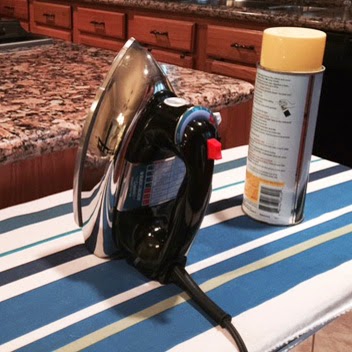
Ironing Board and Iron
Author Patti Londa Greene
Awaken Me: A Devotional Prayer Journal (ISBN 978-1-4627-2578-6)
God, It's Me: 181 Days for Young Adults to Become Passionate about Prayer and Bible Study (ISBN 978-1-4627-3821-2)

Friday, November 28, 2014

Dealing with a Crisis


Many country crisis situations occur in Nigeria. One is a crisis going on right now at the Lagos Airport Cargo Terminal. Last week, custom clearing agents, who worked in the cargo section of the Muhammed International Airport, assaulted officials of the Nigeria Customs Service who came for an inspection of their warehouse.

Armored personnel were called in and many were severely injured during this violent clash. The end result was that cargo terminals have been closed while terminal security management figures out how to handle random people entering the cargo area, violence, inadequate national security issues, and how to clear the terminal of “unwanted” elements. The bottom line is that airport security at the terminal needs to be improved, but many are furious that the terminal buildings have been shut affecting  both revenues and companies that have their cargo currently locked up affecting goods purchased for their Christmas sales – including perishable items.  With criminals jumping fences and illegal access to gates that are not policed, this crisis has become a totally chaotic situation.

 
A newspaper article in This Day Live entitled Taming the Crisis at Lagos Airport Cargo Terminal says the main concerns with this crisis are:
-          A Porous Facility

-          An Inadequate Security, and

-          A Lasting Solution

That is exactly what happens in our lives when we are dealing with an unsurmountable crisis that has become chaotic and uncontrollable.  When a crisis reaches that level, we need to check where the holes are, find the full-proof security, and come up with a lasting solution.
 

First, you need to analyze what is coming into your life porously causing the instability and confusion. Are ungodly influences in your life? Have you been involved in any sinful behavior? Are your attitudes towards people or your circumstances entering your mind causing disruption in how you see your crisis? Second, where is your security? Is your solution to the crisis based on Jesus Christ? Have you confessed your sins and placed your security in the arms of your blessed Lord and Savior? Doing this will fill the inadequate security problem in our lives. When Jesus Christ is leading our lives, our security creates stability and assurance that God will take over and handle our problem. Finally, the lasting solution is in trusting God and seeking His will and His way out. It may involve making changes, require apologies, and/or disassociating from undesirable individuals. Reading the Bible and asking God to speak to you about your problem will bring you peace and a lasting solution to your crisis, but you must obey His Word and His leading as it is shown to you.
 

Plugging up the holes that create porosity, finding the appropriate security in Jesus Christ, and trusting that God can provide a long-lasting solution is the means your crisis can be overcome and maintained.
 

Trust in the Lord with all your heart; do not depend on your own understanding. Seek his will in all you do, and he will show you which path to take. Proverbs 3:5-6

Author Patti Londa Greene
Awaken Me: A Devotional Prayer Journal (ISBN 978-1-4627-2578-6)
God, It's Me: 181 Days for Young Adults to Become Passionate about Prayer and Bible Study (ISBN 978-1-4627-3821-2)

Dedicated to my friend Titi!